Loading
Tanzanite Buying Guide
Tanzanite is one of the world's rarest gemstones, found exclusively in a small area near Arusha, Tanzania. This guide helps international buyers understand tanzanite quality characteristics, certification requirements and how to source authentic stones directly from East Africa.
Understanding Tanzanite Quality
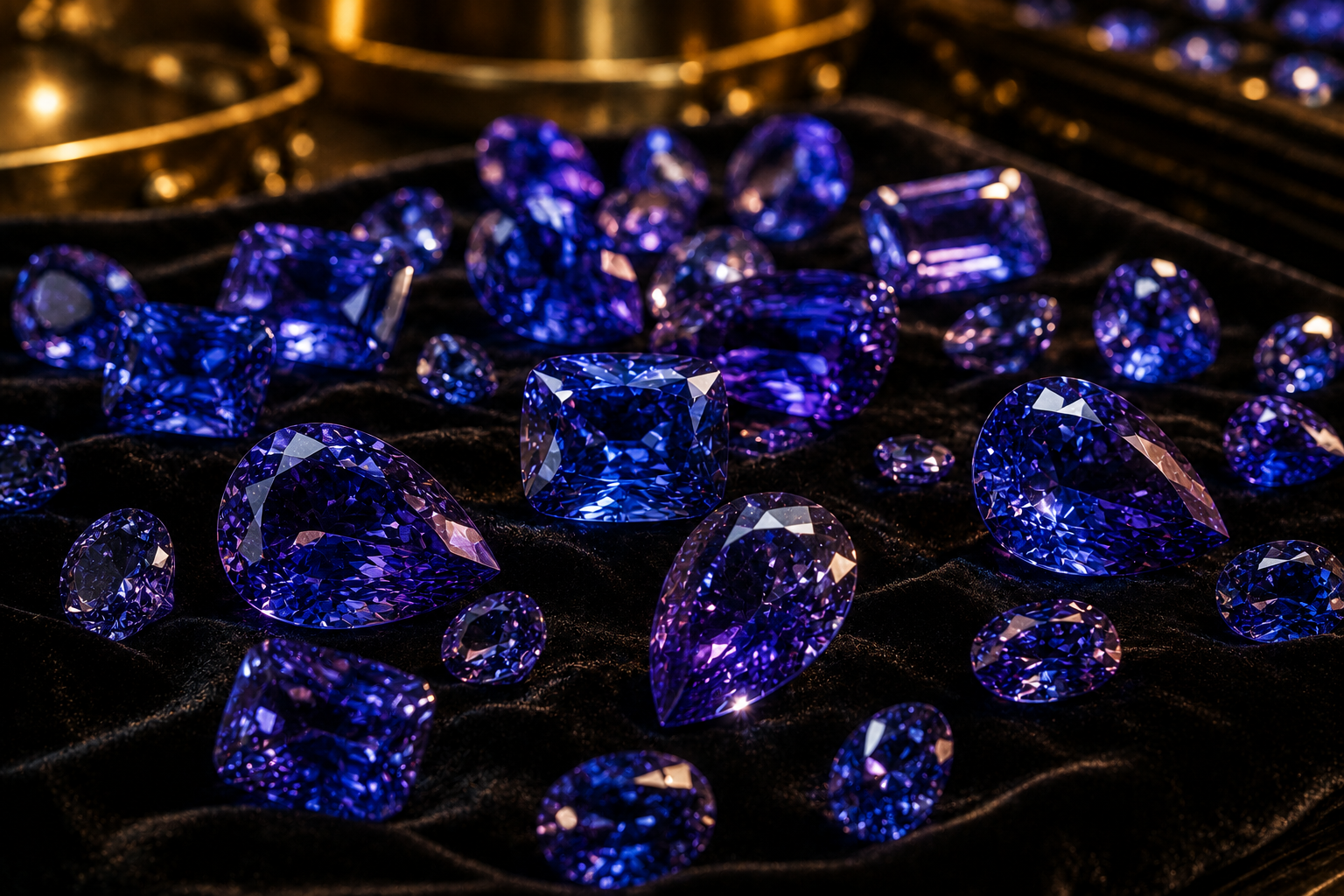
Tanzanite quality is evaluated using the standard 4Cs framework: colour, clarity, cut and carat weight. Colour is the most important value factor — the finest tanzanite displays a deep blue-violet colour with moderate to strong saturation. The most prized hue is a rich blue with violet overtones.
Clarity in tanzanite is typically eye-clean at larger sizes. Stones with visible inclusions are less valuable but may still be suitable for certain jewellery applications. Cut quality affects the stone's brilliance and colour display, with oval and cushion cuts being most common.
Carat weight significantly impacts value, with larger stones being exponentially rarer. Fine-quality tanzanite above 5 carats commands premium prices, while stones above 20 carats are extremely rare and highly sought after by collectors.
Treatment and Disclosure
Most tanzanite undergoes gentle heat treatment to enhance its blue-violet colour. This is a stable and accepted treatment in the gemstone industry, similar to heat treatment of sapphires. Heat-treated tanzanite is the standard in the market.
Untreated tanzanite with fine colour is rare and commands premium pricing. Regardless of treatment status, full disclosure is required by ethical dealers and gemological laboratories. Always request treatment disclosure documentation.
Gemological laboratories such as GIA, AGL and TLGA provide treatment analysis as part of their grading reports. These reports confirm whether the stone has been heated and document its colour, clarity and other characteristics.
Certification and Lab Reports
Always purchase tanzanite with a gemological laboratory grading report. GIA (Gemological Institute of America), AGL (American Gemological Laboratories) and TLGA (Tanzanite Laboratory of Gems and Accessories) are recognised authorities for tanzanite grading.
A grading report documents the stone's colour grade, clarity grade, cut proportions, carat weight, treatment status and origin determination. The report provides an independent assessment that buyers can rely on for valuation and insurance purposes.
AL AIN METALS provides tanzanite with laboratory grading reports from recognised gemological authorities. Each stone comes with documentation confirming its quality characteristics and treatment status.
Sourcing Directly from Tanzania
Tanzania is the world's only source of tanzanite, making direct sourcing from the country the most efficient supply chain. The Merelani Hills near Arusha are the primary mining area, with production ranging from small-scale artisanal operations to mechanised mining.
Working with established sourcing partners in Tanzania provides access to a wider selection of stones and competitive pricing. Due diligence on sourcing partners is essential to ensure responsible mining practices and legal compliance.
AL AIN METALS sources tanzanite directly from mining operations in the Merelani region, providing buyers with access to premium stones at source with full provenance documentation and laboratory certification.
Key Takeaways
Colour is the most important value factor — deep blue-violet with strong saturation is most prized
Heat treatment is standard and accepted — always request treatment disclosure
Always purchase with a gemological laboratory grading report (GIA, AGL, TLGA)
Tanzanite above 5 carats in fine colour is rare and commands premium prices
Direct sourcing from Tanzania provides access to premium selection and competitive pricing
AL AIN METALS provides certified tanzanite with full provenance documentation
FAQ
How do I know if tanzanite is authentic?
The most reliable way to verify tanzanite authenticity is through a gemological laboratory grading report from a recognised authority such as GIA, AGL or TLGA. The report documents the stone's identity, quality characteristics and treatment status.
Is heat-treated tanzanite less valuable?
Heat treatment is standard for tanzanite and does not significantly diminish value for most stones. The treatment creates the blue-violet colour that makes tanzanite desirable. Untreated tanzanite with fine natural colour is rare and commands premium pricing.
What is the price range for tanzanite?
Tanzanite prices vary enormously based on colour, clarity, cut and carat weight. Fine-quality tanzanite can range from $500 to $5,000+ per carat, with exceptional large stones commanding significantly higher prices. Contact us for current pricing based on your specific requirements.
Related Products
Get in Touch
Ready to Source Premium Commodities?
Contact our trading desk for pricing, availability and tailored supply solutions.